
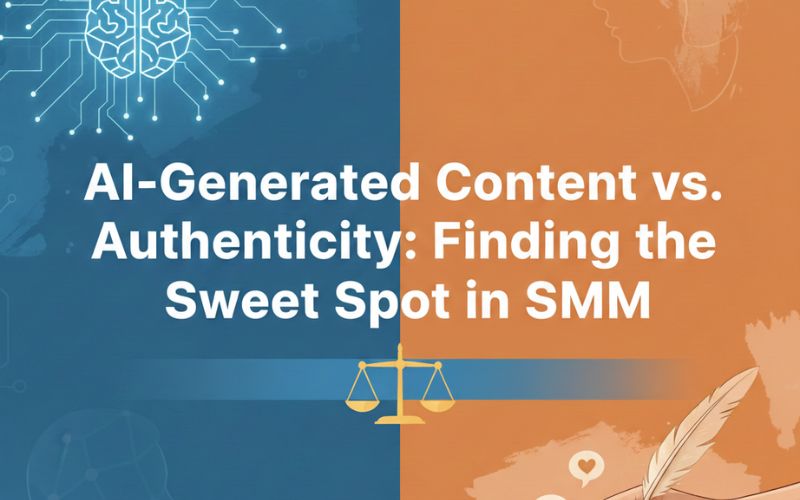
Social media moves fast. Blink, and you’ve already missed the trend, the meme, the “must-post” moment. Marketers are basically expected to be everywhere at once: posting daily, replying instantly, keeping up with whatever TikTok decides is funny this week. But most teams simply don’t have the bandwidth.
Then comes AI-generated content: efficient, scalable, and always on. But there’s a catch: strip everything down to machine-made efficiency, and you risk losing the one thing audiences can sense instantly: realness.
So, do you have to reject AI? No. Instead, use AI and humanness as a combo. Here’s what it’s all about.
The Rise of in Social Media Marketing
Planning, creating, and distributing content is all faster, better, and easier with AI. You’ve got predictive analytics, caption generators, automated post scheduling, and whatnot! Less human effort, more reach.
But here’s the downside: when every brand leans on the same tricks, everything starts to look… suspiciously similar. Think of AI-generated stock visuals or captions that repeat safe but bland messaging. Instead of sparking a reaction, posts blur together. The feed becomes white noise, and audiences just keep scrolling.
Why Authenticity Matters More Than Ever
Today’s audiences are hyper-aware. They can instantly spot formulaic content. And they reward brands that feel real. So, is authenticity about flawless polish? Nope. Not even close. It’s about being relatable, about showing the messy, human side that people actually connect with.
Think about the posts that stick with you:
- An employee sharing their honest take on a day at work
- A behind-the-scenes clip that’s a little shaky but full of life
- Real customers talking about what they actually love or hate about a product
Imperfect? Absolutely. Human? Definitely. True to the brand’s voice? Every single time.
90% of people value authenticity. That’s why 93% find UGC helpful. This way, authenticity also drives results. In practice, this means higher click-through rates, stronger loyalty, and better perception of brand trustworthiness.
Risks of Overusing AI in Social Media
Imagine scrolling a brand’s feed where every image looks AI-generated. You look at the caption and it feels templated. Plus, no one ever responds personally in the comments. Instead of building connections, the brand risks alienation.
Unchecked reliance on AI creates risks that undermine both engagement and credibility:
- Loss of trust: A feed dominated by robotic captions signals to audiences that no one’s really listening.
- Algorithmic penalties: Platforms like Instagram prioritize posts that spark authentic interaction. Generic AI content gets buried.
- Bias amplification: Because AI is trained on existing data, it can unintentionally reinforce stereotypes or skewed perspectives.
- Misinformation: Automated text or visuals, if not vetted, can spread inaccuracies.
- Privacy concerns: AI tools analyze user data. This raises questions around consent and compliance.
- Staleness: Without human creativity, AI posts quickly become repetitive and uninspired.
Emotional Resonance vs. Perfection
AI can generate flawless designs. But “flawless” feels flat. What resonates more? A polished AI image of a product, or a slightly grainy shot of a customer using it with a smile?
Audiences respond to vulnerability, humor, and emotion, the things AI can’t replicate. A team sharing an inside joke in a TikTok video garners more likes than a generic AI-edited reel. The lesson is simple: emotion beats perfection.
How Social Media Algorithms Favor Authentic Engagement
Algorithms actively reward authenticity. TikTok, Instagram, and LinkedIn elevate posts that drive saves, shares, and meaningful comments.
For example, a founder sharing a personal story about a business challenge is most likely to outperform AI-curated “10 tips” content. Why? Because algorithms detect real interaction. And people comment more when they sense real emotion.
But will AI posts still perform well? Yes. But only if paired with authentic engagement. Without that, algorithms will down-rank them.
Best Practices: Blending AI and Authenticity
Here’s how you can weave AI and human creativity together do it:
Human Oversight = Non-negotiable
AI drafts can be quick. But should you post them raw? No. Review everything for tone, accuracy, and context. Make AI your assistant, not your spokesperson.
For example, you might let AI draft LinkedIn captions. But your social media manager can tweak them with customer pain points they’ve actually heard in sales calls. That edit keeps the content sharp and grounded in reality.
Feature Real People Alongside Automation
Can AI captions carry a post alone? Sometimes. But audiences crave faces and stories. Pair automated text with authentic visuals.
For instance, you can share a photo of their customer success team celebrating a milestone, while the caption, polished by AI, highlights how they solved 1,000+ client queries that quarter.
Tell Short, Relatable Stories
Ever wonder why some posts stick while others scroll by? Stories anchor attention. AI can help structure. But humans bring nuance.
For example, do not post a generic “We hit 10K followers!” graphic. Instead, you could share a short clip of the founder thanking the community and recalling the first 100 followers.
Answer Questions Like a Human, Not a Bot
Audiences often test: “Is someone real behind this account?” Use AI to frame quick replies. But always add personality and brand expertise.
Suppose a user asks about product pricing on Instagram. AI might draft a polite reply. The manager adds, “Happy to walk you through options if you DM, we know choosing the right plan can feel overwhelming.”
Ditch Generic Phrases for Specifics
AI often defaults to clichés: “Unlock your potential” or “Driving innovation.” Readers scroll past. Swap them for concrete, relatable lines.
Instead of “We value our customers,” a wellness brand could post: “When John told us our app helped him meditate daily for 30 days, we knew we were onto something.”
Be Transparent About AI Use
Do audiences really care if AI is involved? Increasingly, yes. Transparency builds trust. Mention where AI supports, and highlight the human touch layered on top.
A marketing agency might post, “We used AI to crunch the numbers, but these insights are from our strategist who’s been testing campaigns for a decade.”
Prioritize Quality Over Quantity
Is it better to post daily with AI fillers or fewer, richer posts? Always the latter. Flooding feeds with sameness leads to fatigue.
So, rather than 14 AI-suggested posts a week, you should go for 5 thoughtful ones, mixing product photos with candid behind-the-scenes reels.
Infuse Brand Voice Into Every Post
How do you make sure AI doesn’t flatten your personality? Create guardrails. Every output should sound unmistakably “you.”
Suppose there is a quirky travel company. It can train AI on their past captions full of puns and playful emojis. Then, it can manually adjust final posts so they keep the brand’s signature humor intact.
Conclusion
Use AI to help with boring tasks: scheduling posts, finding hashtags, making outlines, checking performance. But things that touch people like stories, pictures, and talking with your audience should stay human.
A few simple tips:
- Let AI handle the data. But humans tell the story.
- Use AI captions with real photos, behind-the-scenes videos, or customer shoutouts.
- Check your feed often. Look not just at numbers, but how it makes people feel.
- Don’t just post and disappear. Reply to comments and DMs.
Think like this: AI handles “what” and “when.” Humans handle “why” and “how.” This keeps your feed from being boring or looking fake. Brands that get this right get attention, trust, and loyal fans.
Today, people want realness. Using AI for speed and humans for heart is the best way to grow and stay human. Insights Dubai leverages 13+ years of expertise and experience of partnering with businesses across 10+ countries to design and develop strategies to achieve measurable growth and success.
Connect with us today to elevate your brand with our creative services.